
Maritime matters sailed through the heart of the Shangri-La dialogue, run by the International Institute for Strategic Studies, but the announceables were all at sea.
Call it the horror-of-Hormuz effect: when normal ocean traffic is cut, normal life on land suffers.
The meaning of the horror effect that Australia’s Richard Marles offered his fellow defence ministers is that their conversations were more urgent, the questions harder and stakes higher.
“The seabed is becoming a battlefield,” Marles said. “The shadow fleet is becoming a weapon. The chokepoints through which our region’s prosperity flows are under a pressure they have not experienced in the modern era.”
The ministers responded with announcements that showed how the strategic meaning of the ocean domain expands: what’s on the waves, what’s below the waves, and what lies on the seabed.
Australia, the United Kingdom and the United States announced the first AUKUS Pillar II project: to develop common enabling systems to be used by Uncrewed Undersea Vehicles operated by the three nations. So don’t try to build a common UUV, which would be another version of the Pillar I effort at a nuclear submarine. Instead, create common payloads that each nation’s different drones will be able to carry “to protect critical national seabed infrastructure; deploy cutting edge surveillance, reconnaissance, and strike capabilities.”
Get not just an AUKUS announceable but a deliverable. And quickly! A key instruction is to get this Pillar II project done and delivered next year. The trilateral partnership was launched in 2021, which means it has taken far too long to build something to sit on top of the second column.
The AUKUS report from the British parliamentary defence committee, released in April, concluded that Pillar II progress had been “disappointing and inadequate” and it faced “an uphill battle to restore credibility.” The inquiry heard that Pillar II aims were “exceptionally broad”—with eight workstreams ranging from AI to undersea capabilities—and this wide scope was an impediment to delivery. Time for the three partners to get something done.
Richard Marles told the dialogue the Indo-Pacific needs a step change in “regional maritime domain awareness” to meet the threat of grey zone sabotage to critical maritime infrastructure. What’s needed, he said, are satellite-based surveillance, autonomous undersea systems, enhanced maritime domain awareness, and the data and AI capabilities to track and attribute behaviour The tools would also be turned against the “systematic plunder” of fisheries. Marles said Australia’s estimate is that “a third of the total fish catch in Southeast Asia and the Pacific is illegal.”
One action from Shangri-La was the creation of group of 17 nations—from Europe, the Middle East, Oceania and Southeast Asia—to protect underwater communications and energy cables. Their title is GUIDE, standing for Guiding Principles for Underwater Infrastructure Defence Exchanges. The GUIDE countries are: Australia, Brunei Darussalam, Estonia, Finland, France, Italy, Latvia, Lithuania, Malaysia, the Netherlands, New Zealand, the Philippines, Qatar, Singapore, Sweden, Thailand, and the United Kingdom.
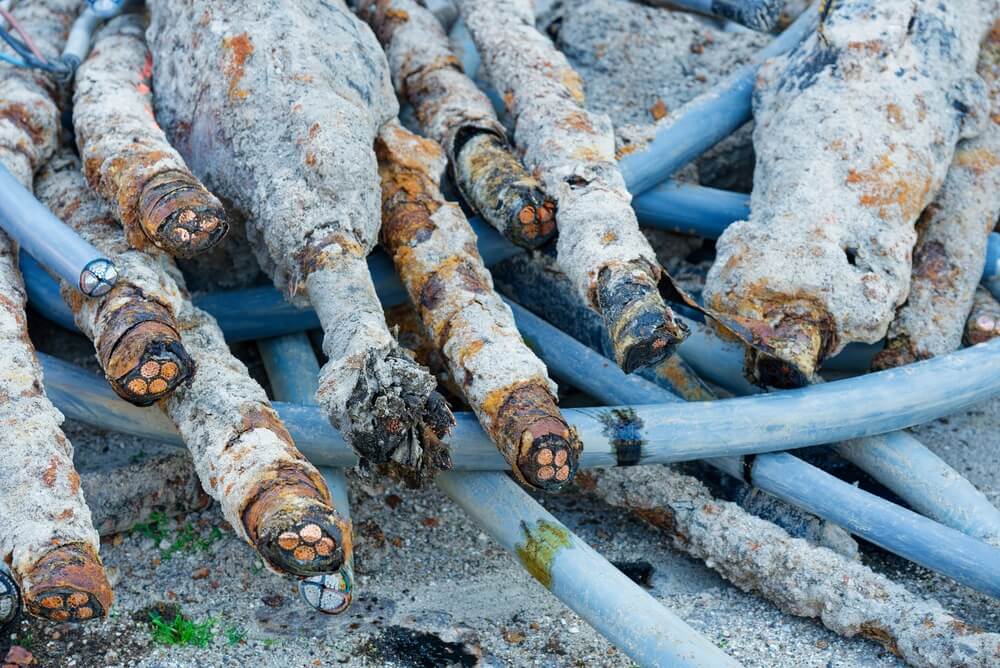
Subsea telecommunications cables carry more than 95% of all internet and data traffic under the ocean. Add in subsea energy transmission for oil and gas pipelines and power cables, and that’s a lot of essential conduits and pipes on the seabed, which are now targets for attack and sabotage.
Since the end of 2024, several cables have been severed across the Baltic and the Taiwan Strait. Taiwan has reported five cases of seabed cable damage in 2025 — compared with three in 2024 and three in 2023. The obvious suspects are Russia and China, but ministers tiptoed around what’s called “attribution”.
The GUIDE has plenty of tiptoe. It’s “voluntary, and non-legally and non-financially binding,” creating no new legal obligations nor prejudicing existing rights and obligations under international law, including the UN Law of the Sea. The GUIDE countries will consult on how to respond outside of territorial waters, identifying attackers, and issues of jurisdiction and enforcement. The effort at what’s called “voluntary practical defence cooperation” will look at best practices, promote norms, and how to do “incident and crisis response.”
The Hormuz-horror-effect led ASEAN defence ministers to meet to emphasise the “right of transit passage” under the Law of the Sea, underscoring their commitment to keeping “waterways open and safe for the free flow of trade and supplies, including the Straits of Malacca and Singapore.”
The specific mention of the Malacca and Singapore straits was the hint that this was more than a motherhood statement. Instead, read it as both promise and reassurance.
In April, Indonesia’s President Prabowo Subianto told his ministers in a televised cabinet meeting that the Strait of Hormuz “determines the fate of many nations, of the price of oil. And the key to it is held by one country.” “But do we realise”, he asked them, raising the pitch of his voice and his eyebrows in a way that could only be described as coy, that “70% of East Asia’s energy needs and 70% of its trade pass through the Indonesian straits?”
Indonesia’s finance minister, Purbaya Yudhi Sadewa, went beyond coy and seized on Iran’s thoughts about a ship toll, saying Indonesia and the other two littoral states could do the same in the Malacca Strait: “Iran is now planning to charge ships passing through the Strait of Hormuz. If we split it three ways – Indonesia, Malaysia, and Singapore – it could be quite substantial. Our stretch is the largest and the longest.”
The Malacca musings provoked a notable private and public diplomatic funk. The formal/technical term for this is “to throw a dead cat on the table.” The statement from the ASEAN defence ministers is the region’s effort to formally and finally bury the cat. In the maritime domain, the Law of the Sea is the rules-based-order. And maritime Southeast Asia knows how extraordinarily valuable that order has been, and must continue to be.
Graeme Dobell is reporting for SAA from the Singapore Shangri-La defence dialogue.