
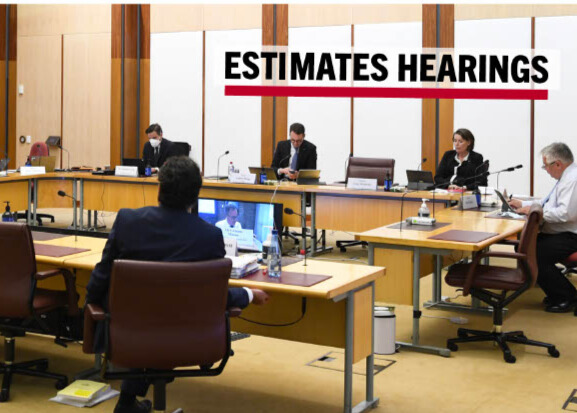
Strategic Analysis Australia is publishing a baker’s dozen sets of questions on the Defence portfolio that we’d like to know the answers to. Hopefully senators have similar interests and will seek some answers from traditionally reluctant Defence officials.
Coherent, relevant and informative answers would be a sign that officials are across the detail of the $63 billion Defence budget and the activities they lead. Generalities and boilerplate repetition of existing public policy statements would be indications of a lack of transparency – and perhaps a lack of knowledge – by the responsible officials appearing before Parliament.
We’d note that it’s generally best to get answers at the table instead of giving officials time to carefully craft written answers long after the event that ultimately don’t shed much helpful light on the original issue.
1. Increases’ in Defence spending
The Government has claimed in the 2026 National Defence Strategy that it is increasing Defence spending by $14 billion over the four years covered by the Budget’s forward estimates.
This seems to include $5 billion in alternative financing that is not an actual government appropriation, as well as anticipated revenue from the sale of Defence estate properties, which is not shown in the PBS 2026-27.
There is only an increase of around $7 billion set out in the budget measures table (Table 2) in the 2026-27 PBS including $6,803 million for the Integrated Investment Program and $178 million for Indo-Pacific cooperation.
This is offset by:
- a $2.9 billion reduction through savings in ‘external labour and non-wage expenses’
- a reduction of $3.2 billion as a foreign exchange adjustment, and
- a bring forward of $1.7 billion from the forward estimates into 2025-26 for nuclear-powered submarines.
When these elements are aggregated, the Defence appropriation appears to decrease by around $1.2 billion over the forward estimates from what was previously planned rather than increase by $14 billion.
- How does Defence account for the $14 billion increase in defence spending stated in the 2026 National Defence Strategy?
- Is the Government including alternative financing and potential revenue from the sale of defence estate in the $14 billion?
- If Defence estate sales are included, how much is this revenue reduced by the estimated costs of decontamination, remediation, relocation of people and functions, heritage obligations and disposal costs for the sites sold?
- Can Defence officials provide a table with explanatory notes showing the make-up and sources of the claimed increase?
2. Defence spending as a percentage of GDP
According to the figures in the 2026-27 budget documents, Defence spending as a percentage of GDP reached 2.13% of GDP in 2025-26, a higher figure than originally forecast in the 2025-26 budget documents (around 2.05%). This increase was largely driven by the Government bringing forward funding from later years into 2025-26 to pay for nuclear-powered submarines (around $2 billion) and unnamed capabilities (also around $2 billion according to the 2025-26 PAES adjustments table).
In 2026-27 the defence budget decreases by around 1% and falls back to 2.02% of GDP. This is the first decrease since 2012-13, although it should be noted that the decrease is largely driven by moving funds forward into 2025-26.
- What was the $2 billion capability bring forward mentioned in the 2025-26 PAES spent on?
- Was delivery of any capabilities ‘accelerated’ with the funding? If so, which ones, delivered when?
- Was any of the funding required because of cost increases for things already planned and budgeted for? If so, what?
The Government has claimed that under the NATO methodology of counting defence spending Australia is spending 2.8% of GDP. The Government has not released a line-by-line accounting showing which elements of public expenditure are included in the 2.8% figure. Strategic Analysis Australia has not been able to validate this figure.
The Government’s counting appears to include a large part of the Department of Veterans’ Affairs’ budget. However the NATO methodology does not include this kind of spending, only retirement pensions. Financial compensation to veterans is not the same thing as retirement pensions. Organisations such as the Stockholm International Peace Research Institute which track defence spending according to the NATO methodology do not include spending such as the Department of Veterans’ Affairs.
- Has the Government developed a line-by-line accounting of the 2.8% of GDP figure? Can Defence officials provide a clear table setting out the categories and dollars in each category that make up the claimed 2.8% figure, with explanatory notes?
- Who has the Government consulted with to determine that including DVA spending is consistent with the ‘NATO methodology’?
- Given the Australian Signals Directorate has a defence role but also a broader national role, how is ASD’s $9.6 billion budget over the forward estimates budget apportioned between these roles for the 2.8% calculation (because its national role falls outside the NATO defence spending definition)?
The Government has claimed that it is making ‘historic’ increases to defence spending. It has also claimed that over the NDS decade defence spending will grow from 2.8% to 3.0% of GDP (i.e., 0.2%) under the NATO methodology.
- Why does the Government think that an increase of only 0.2% of GDP over a decade constitutes a ‘historic increase’.
3. AUKUS transparency: lessons from the ANAO’s Collins LOTE audit, and US Navy information provided to the US Congress
According to the recent Australian National Audit Office report on the Collins-class submarines’ Life of Type Extension (LOTE), Defence has not achieved its planned milestones for this program since it began in 2018. Delays have accumulated over the life of the project. Only one of five key design reviews (contract milestones) was achieved on schedule, and Defence modified milestone approaches and baselines as design issues emerged. Despite not achieving design milestones and receiving abundant advice on the risks around the LOTE program, Defence nevertheless continued with it. The capability upgrades that were meant to be delivered under the LOTE have now essentially been abandoned.
The LOTE experience confirms that demonstrated progress against the key milestones and design review timelines for AUKUS is critical to assess whether that program is on track. Good management of AUKUS requires having a clear program map of schedule program milestones including the design reviews required to go from concept design to detailed design to the start of construction.
Public and parliamentary confidence in the AUKUS program requires this information to be made public. Other countries share similar information: US Navy documentation to support US Congressional consideration of the annual Pentagon budget includes some 500 pages of detailed milestone and schedule information to support Congressional consideration of the Pentagon’s shipbuilding plans in the budget. This includes tens of detailed pages on each of America’s most secret and important programs – like its Columbia-class ballistic-missile submarine program and the Virginia-class SSN program.
The Australian Parliament should receive similar detailed supporting information for the key submarine and shipbuilding programs Defence is responsible for delivering. Some of this information was previously included in the ANAO Major Projects Report (e.g., for the Attack-class submarine program) – whose future is now uncertain.
- What are the key program milestones for the SSN-AUKUS program, including design reviews?
- Which design reviews have been completed?
- Which design review is the gateway to detailed design? Has that design review been completed? If so, when was it completed? If not, when is it planned to be completed?
- How has the schedule for that design review changed over time?
The UK government and Ministry of Defence appear to be the decision makers for the SSN-AUKUS design.
- What role will Australian officials have in the design process and what formal decision making roles and authorities will Australians have in it?
Even if the SSN-AUKUS design and development is a UK-led process, it is essential that the Australian Parliament understand the key milestones and decision points in this critical program.
- What will Defence officials do to provide the Australian Parliament and public with visibility of the program’s key milestones, design process timeline and progress or delay against these milestones?
(No such program information has been provided by the Government or Defence officials on SSN-AUKUS to date, just the impressionistic sketch of AUKUS that is the “Optimal pathway”, accompanied by officials telling us everything is fine, and adding that asking questions is politicising the program.)
4. Cashflow acceleration and budget turbulence in the AUKUS program
The 2025-26 Defence PBS for DEF 1, the AUKUS submarine program, budgeted $3.3 billion for the AUKUS program in the current financial year. That is more than the previous largest Defence project in Australia’s history – the F-35 Joint Strike Fighter program – ever spent in a single year (its high point was around $2.5 billion in a year and that was around the peak of actual delivery of aircraft to the RAAF).
The Additional Estimates for FY 2025-26 increased that AUKUS spend to around $3.9 billion. And then the 2026-27 PBS revealed that even more funds had been brought forward for AUKUS into this current financial year, taking the estimated spend for 2025-26 to more than $5.4 billion.
- What is the reason for the two major increases in the DEF 1 AUKUS program budget in 2025-26 – spending unplanned additional billions in a single year on AUKUS while cuts are made to other Federal programs like the NDIS?
- How does the Defence budget accommodate this substantial turbulence in spending on AUKUS without it affecting other planned and funded activities in other parts of Defence, including the Army and Air Force? Is there this much fat in the annual Defence budget?
- Why is the AUKUS budget so turbulent when we are still years away from buying or building any actual submarines and when significant spending on major facilities like Henderson has not begun?
- Is similar budget turbulence expected in the AUKUS program over the forward estimates?
5. AUKUS – Nuclear-powered submarine sustainment
According to Table 6 in the PBS, the cost of nuclear-powered submarine sustainment is rising rapidly.
- 2025-26 budget estimate for 2025-26 was $6.2 million, however the estimated actual has come in at $61.1 million.
- 2025-26 budget estimate for 2026-27 was $6.4 million, however the 2026-27 budget estimate for 2026-27 is now $68.5 million.
- 2025-26 budget estimate for 2027-28 was $164.8m, 2026-27 budget estimate for 2027-28 has now dramatically increased to $433.2m.
By the end of the forward estimates the estimated sustainment cost is almost half a billion dollars.
- Considering we do not yet have any nuclear powered submarines, what is being sustained?
- Where are these sustainment funds being accounted for in the PBS—under the Australian Submarine Agency’s budget or as part of Program 2.16: Nuclear-powered submarines?
6. Shipyard Infrastructure
The Government has previously announced that it is ‘will provide $12 billion towards delivering a Defence Precinct at Henderson to deliver continuous naval shipbuilding and AUKUS in Western Australia.’ This sum was to be a ‘down payment’ on around $25 billion over the decade.
The Government has also announced $30 billion for a submarine construction yard at Osborne in South Australia. It also announced a $3.9 billion ‘down payment’ on the yard.
There is no line for either of these programs in the Defence PBS.
- Where are these sums programmed in the budget papers?
- Will this funding come from Defence’s existing budget allocation?
- How much of this funding is programmed in the forward estimates?
- How much of this funding has been approved to date?
- How much of this funding has been committed or spent to date?
- What are the timelines, key milestones and decision points for the Henderson Maritime Precinct and for the Osborne shipyards?
7. Collins Subs Life of Type Extension – the LOTE
According to the recent ANAO audit of the Collins LOTE, after a decade of planning for the program the Government now is not planning to install new systems such as main motors, diesel engines and generators and electrical distribution systems on ‘at least five’ of the six Collins-class submarines that were the core of the LOTE program.
The approved budget for the LOTE is $1.56 billion (against a total cost estimate of $5.5 billion for the program) of which $693 million had been expended by February 2026. This has included acquiring new main motors and diesel engines as well as conducting design and engineering work to integrate those systems into the submarines.
Instead, according to the Government, it is going to take a ‘sustainment’ focused approach to extending the life of the Collins to cover the transition to the future nuclear-powered submarine fleet. The Government has stated that ‘the Collins class will be supported by increased investment of up to $11 billion over the next decade for sustainment.’
Considering the annual cost of sustainment for the Collins over recent years has averaged around $850 million (which includes deep maintenance such as full-cycle and mid-cycle dockings), the $11 billion looks like it only covers the future sustainment cost rather than significant upgrades to the submarines.
This suggests that the Collins class will continue to operate largely in its current configuration until is it withdrawn from service.
- What outcomes of enduring value has the Commonwealth received for the $693 million?
- Does the Commonwealth hold capital assets such as new main motors and diesel engines and generators? What did they cost? What is Defence now intending to do with these components?
- Is Defence still expending funds on design work for the integration of new systems into any of the Collins submarines? If so, why and which systems?
- What does the planned $11 billion for the Collins class cover beyond continued sustainment over the coming decade? If so, how much of the estimate is for non-sustainment work? (We don’t know” or “We can’t say” are not answers that will build confidence in light of the ANAO report revelations)
- Does Defence plan on conducting any further major capability upgrades to the Collins class over its remaining life?
- What is currently the planned withdrawal date for the each of the Collins class now that the Government has taken the decision to have a “sustainment focus” instead of delivering the ambitious scope of the LOTE as planned from 2018 until recently?
8. Cost of the Landing Craft Heavy
The Australian Department of Defence and the US Department of Defense (or War) have both selected Damen’s LST-100 design. Australia is acquiring it under project LAND 8710 Phase 2 (Landing Craft Heavy) project. The US has termed it the Medium Landing Ship.
According to US Department of War budget papers, the USN is acquiring 16 Medium Landing Ship for $USD4670 million (around $AUD6,540 million), or $AUD408 million per vessel.
According to the 2026-27 PBS, Australia is acquiring these same vessels, in our case described as eight Landing Craft Heavy, for $AUD7,261 million, or $AUD907 million per vessel. This figure only includes Military Equipment Acquisition cost, not Other Project Inputs to Capability (i.e., FIC) such as infrastructure so the scope of the US and Australian figures seems comparable.
The Australian vessels are to be built at Henderson in Western Australia by Austal, the Australian Government’s strategic shipbuilding partner. Austal has stated the contract figure is around $AUD4 billion (around $AUD500 million per ship, a figure much closer to the US cost).
- Why on Defence PBS figures is Australia paying over twice as much for the same vessel as the US according to the approved project budget?
- What accounts for the significant difference between the contract with Austal and the approved project budget?
9. Civilian and external workforce
The 2025-26 PAES included a $1,557.9 million funding reduction to be achieved through savings in ‘external labour and other non-wage expenses.’ Of this, $1,316.9 million falls in the coming forward estimates. The 2026-27 PBS includes a further $2,900.1 million in savings, bringing the total reduction over the coming forward estimates to $4,217.0 million.
Depending on what benchmark one uses, these savings are roughly equivalent to 3,000-4,000 contractors per year.
Meanwhile, the Department of Defence’s Australian Public Service workforce is planned to sit at around 20,170 over the forward estimates (PBS Table 8).
- How much of Defence’s external workforce will need to be cut in order to achieve these savings?
- How will Defence make up for the lost external workforce with no additional APS workforce?
- What current outputs will be de-prioritised in order to manage the decrease in workforce?
10. ADF workforce
The 2025-26 PBS reduced the ADF workforce target by around 5,000 because of persistent failure to hit growth targets. However this year Defence has exceeded the new target by around 2,300. Overall, the ADF workforce appears to have grown by around 3,500 over the past two years. This is a very welcome development given the challenges to recruitment and retention since 2016. Clearly substantial improvements to Defence’s recruitment processes and retention strategies have been achieved.
- What are the main factors that have delivered significantly improved outcomes?
- How many ADF personnel have accepted the Continuation Bonus (currently set at $40,000) since it was established to improve retention? How many have accepted it to date in 2025-26, and at what cost?
- Can the Department determine how much of the increase is due to improved recruitment outcomes and how much is due to decreased separation rates?
The ADF recruitment process has been very lengthy, with the result that potential recruits have dropped out. Defence has stated that it is streamlining the process.
- What is the average time taken for an individual to be recruited into the ADF from the time they begin the formal recruitment process? How has this changed in recent years?
Figures of about 90% of applicants being rejected or dropping out of the recruitment process have been in public discussion. A 10% success rate from the motivated pool of Australians who have an interest in an ADF career seems odd and low.
- What percentage of applicants actually join the ADF? How has this changed in recent years?
While the forward estimate targets for ADF personnel were reduced in the 2025-26 PBS, they have been increased in the 2026-27 PBS but not back up to the level they were at before 2025-26. The final goal for ADF workforce has been stated in earlier strategic documents at around 80,000.
- What is the Government’s approved long-term goal for ADF workforce?
- When does Defence think it will achieve that level?
11. SEA 3000 – General Purpose Frigate
The Government has selected the Japanese Mogami-class frigate for its General Purpose Frigate requirement and entered into contract.
The 2026-27 PBS states that the approved project expenditure is almost $8 billion ($7,532 million for Military Equipment Acquisition and $422 million for Other Project Inputs to Capability).
- What is the scope of the $8 billion approval?
The planned expenditure for military equipment for 2026-27 is $649 million. This is a large amount of money for a project that has only recently entered into contract unless Australia is acquiring a vessel (or vessels) that is already under construction. Similarly, the 2029 delivery date for the first vessel is extremely ambitious if it was not already under construction for the Japanese Maritime Self-Defense Force (JMSDF).
- Is Australia acquiring Mogami-class frigates that were already under construction for the JMSDF, and, if so, how many?
- How will modifying ships being built for the JMSDF (to operate the set of missiles and other weapons that other RAN warships use) affect these early ships’ costs and schedule, given they are likely to have already begun construction and so may need to be modified after construction has begun?
- Will redesign to accommodate these and other Australian changes delay construction and delivery, and, if so, how long is the estimated time?
- Is Defence still confident in the 2029 delivery date for the first Mogami?
- When is construction of the first Mogami class ship in Australia at Henderson in Western Australia estimated to begin and be completed? (The current estimate is fine, noting it may change, but Defence should have a current estimate for this if doing competent program management.)
12. Army sustainment
The 2026-27 PBS plan for Army sustainment has decreased significantly from the forecast in the 2025-26. The decrease is substantial for 2026-27 ($380.6 million / 12.0%) and even more for 2027-28 ($651.0 million / 19.1%)
| 2025-26 | 2026-27 | 2027-28 | 2028-29 | 2029-30 | |
| PBS 2025-26 | 2,947.5 | 3,178.5 | 3,411.7 | 3,702.9 | n/a |
| PBS 2026-27 | 2,901.8 | 2,797.9 | 2,760.7 | 3,382.4 | 3,684.4 |
| Decrease | -45.7 | -380.6 | -651.0 | -320.5 | |
| % decrease | -1.6% | -12.0% | -19.1% | -8.7% |
- What is driving an almost 20% decrease in Army sustainment?
- How will this affect Army’s preparedness?
- Which capabilities are being prioritised? And conversely which capabilities will be negatively impacted?
13. F-35A flying hours – falling but pricey.
The long term flying hours target for the Air Force’s F-35A fighter aircraft has been revised downwards again in the 2026-27 PBS.
- In the 2020-21 PBS the long term target was 14,900 hours.
- In the 2022-23 PBS the long term target was revised downwards to 13,500 hours.
- In the 2024-25 PBS the long term target was revised downwards again to 12,000 hours.
- In the 2026-27 PBS the long term target was revised downwards again to 10,000 hours.
The highest number of flying hours Defence has ever achieved was 9,956 hours in 2023-24.
What consequences is the Air Force managing as a result of the reduced flying hours and what does it mean for. Australia’s air combat capability and readiness?
What is driving these continual downwards revisions?
If Air Force previously considered 14,900 hours were necessary to develop and maintain pilot skills, what has happened since then to conclude the same outcome can be achieved through only two-thirds of those flying hours?
Can pilot skills be developed and maintained on 10,000 hours per year?
Have sustainment budget pressures played a role in these downwards revisions?