
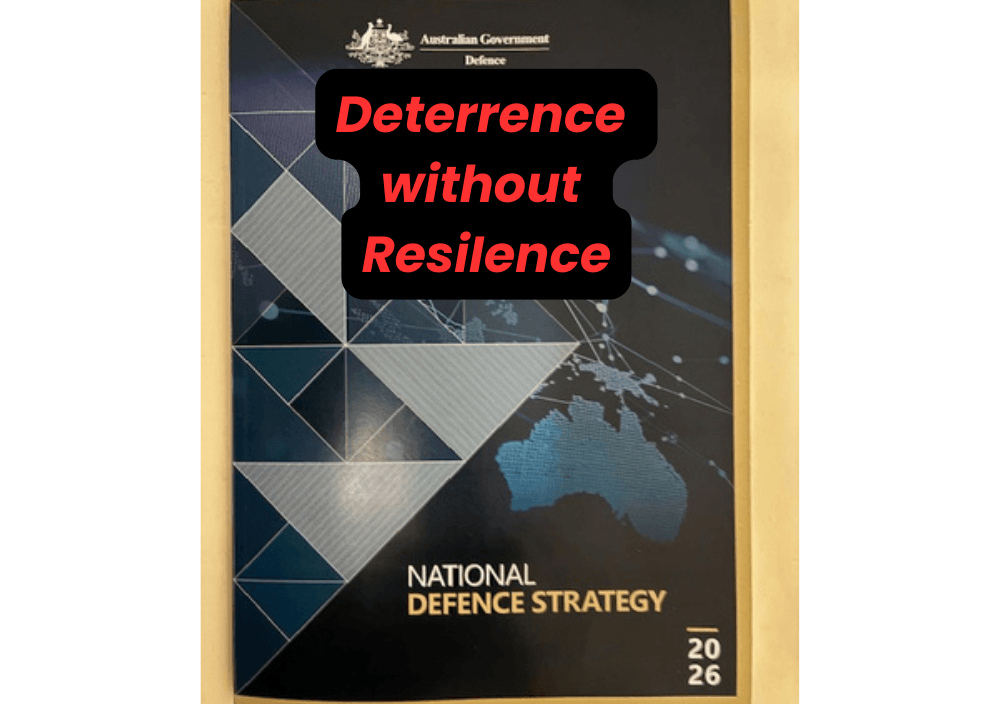
Australia’s strategic environment has deteriorated faster than its defence posture has adapted. The issue is no longer simply whether Australia is spending enough on defence, it is whether it is investing in the capabilities required to withstand the kind of conflict it is most likely to face.
A World That No Longer Exists
These reflections are initial observations on the 2026 Defence Strategic Review and Integrated Investment Program, informed in part by my experience contributing to the 2020 Force Structure Plan. The world that shaped that plan no longer exists.
In 2020, the strategic outlook was deteriorating but still broadly predictable. Strategic competition was intensifying, but it remained bounded by geography, time, and a degree of restraint. Warning time existed although reduced. Distance provided a measure of protection. Conflict, while persistent, remained largely contained.
That world has now given way to something fundamentally different. The contemporary security environment is defined by speed, scale, and systemic instability. Warning time has compressed from months and years to hours and minutes. Distance has been eroded by range, precision, and persistence. Vulnerability is no longer theoretical; it is immediate and exploitable.
The central question is no longer whether the world has become more dangerous. It is whether Australia is preparing for the reality of that danger or for a version of conflict that no longer applies.
From Managed Competition to Systemic Instability
In 2020, there were fewer than 60 active armed conflicts globally, predominantly intra-state and geographically contained, with no major state-on-state wars between advanced militaries (Pettersson & Öberg, 2020). Strategic warning time still existed, allowing governments to respond deliberately to emerging crises. Cyber activity was persistent but largely below the threshold of systemic disruption, and escalation timelines remained comparatively measured (International Institute for Strategic Studies [IISS], 2020).
By 2026, this model has collapsed. There are now over 100 active armed conflicts worldwide, including large-scale state-on-state war in Europe at a scale not seen since World War II (International Committee of the Red Cross [ICRC], 2026; Uppsala Conflict Data Program [UCDP], 2024). Conflict has become more lethal, more interconnected, and less constrained.
Cyber operations have evolved into tools of strategic disruption, capable of targeting critical infrastructure with cascading effects across energy systems, financial networks, and public services (Australian Signals Directorate [ASD], 2023). At the same time, the proliferation of hypersonic and advanced ballistic missile systems has compressed decision-making timelines from weeks and months to minutes and hours (IISS, 2024).
Geography, once central to Australia’s strategic thinking, no longer provides the buffer it once did. In the Indo-Pacific, militarised zones such as the South China Sea now host forward-operating infrastructure, missile systems, and persistent surveillance capabilities, placing forces in continuous proximity (Asia Maritime Transparency Initiative [AMTI], 2023).
The result is a strategic environment in which conflict can emerge, escalate, and propagate faster than governments can respond, a decisive shift from managed competition to systemic instability.
The Illusion of Increased Investment
Against this backdrop, Australia’s defence investment appears substantial, but this perception is misleading. The 2020 Integrated Investment Program committed $270 billion over the decade to 2029–30, underpinned by an assumed annual growth rate of approximately 5.4 per cent from FY2023/24 (Australian Government, 2020a; 2020b). When that baseline is rolled forward to 2026, it equates to approximately $370 billion in contemporary terms.
The 2026 Integrated Investment Program, at around $425 billion through to 2035–36, therefore, represents a like-for-like uplift of roughly 15–20 per cent, not the ~60 per cent increase suggested by nominal comparisons (Australian Government, 2026). Once defence-specific cost growth driven by technological complexity, workforce pressures, and sustainment demands is also considered, the real increase in capability is likely closer to 10–20 per cent (IISS, 2024).
This modest uplift must be understood in the context of a threat environment that has deteriorated far more rapidly. The 2020 plan was conceived and funded during a global pandemic and economic crisis. The 2026 program, delivered in a far more dangerous world, does not represent a commensurate step-change in resourcing. The implication is clear: the pace of investment has not matched the pace of strategic deterioration.
The Burden of Long-Term Platforms
This gap is compounded by how investment is allocated. A growing proportion of Australia’s defence spending is concentrated in a small number of high-cost maritime platforms, particularly nuclear-powered submarines and future surface combatants which together account for well over one-third of planned investment (Australian Government, 2020b; 2026). These capabilities are strategically important. They contribute to deterrence, enhance alliance integration, and provide long-range strike options. However, they are also long-lead programs with timelines extending well into the late 2030s before meaningful operational capability will be realised (Australian Government, 2024). The consequence is that a substantial share of Australia’s defence investment is effectively locked into future capability. While this may be justified in the context of long-term strategic competition, it reduces the flexibility available to address the immediate risks of the 2020s and early 2030s.
Capability Trade-offs and Emerging Vulnerabilities
The effects of this concentration are already visible in capability trade-offs. Medium-range air defence, capable of protecting critical infrastructure and ADF assets from the late 2020s as planned for in the 2020 Integrated Investment Program is now unlikely to be delivered until well into the 2030s. At the same time, the cancellation of the ADF’s maritime mine countermeasure capability replacement project removes a function that would have restored demining capacity before the end of this decade (Australian Government, 2024; 2026). These are not marginal capabilities. They are fundamental to Australia’s ability to defend its territory, protect its infrastructure, and sustain its economy. As an island nation heavily dependent on maritime trade, Australia’s security is inextricably linked to the integrity of its sea lines of communication.
The absence of a credible mine countermeasure capability, combined with limited missile defence and exposed infrastructure, creates vulnerabilities that could be exploited at relatively low cost by an adversary. The net effect is stark: as the threat accelerates, near-term capability is being deferred in favour of long-term platforms. Yet U.S. and Australian strategic assessments are increasingly converging on a sobering reality: the risk of conflict between the US and China in the Indo-Pacific before the end of this decade is no longer remote. In such a scenario, Australia’s role, whether formally declared or not, would almost certainly involve the provision of intelligence, logistics, and access to critical infrastructure, effectively positioning it as an indispensable staging base for allied operations. That alone is sufficient to render Australia a legitimate military target.
Within the framework of Chinese military doctrine, which emphasises striking early to dislocate an adversary’s ability to respond, Australian bases, ports, airfields, and enabling infrastructure would likely be targeted in the opening hours of any conflict. The combination of long-range precision strike, cyber operations, and persistent surveillance means these attacks would not be symbolic, they would be designed to paralyse. Any assumption that Australia’s geography provides meaningful protection is untenable. The scale, speed, and precision of contemporary strike capabilities would fundamentally overwhelm legacy assumptions about distance and warning time. If such a conflict were to occur, the opening phase would not be a warning, it would be a shock, and one delivered at a scale and intensity that would make Australia’s experience of war on its own soil seem almost benign by comparison.
Misinvestment and the Failure of Deterrence Logic
At around 2.8 per cent of GDP, given the Governments revised method of calculating defence spending, Australia’s defence spending sits within a range that is increasingly being challenged by the US, which has called for greater allied contributions to both defence spending and national resilience (Australian Government, 2024; U.S. Department of Defense, 2025; The White House, 2025).
However, for Australia the central issue is not simply underinvestment, it is misinvestment. In the most credible scenarios, Australia is unlikely to face invasion. Instead, it will face coercion: pressure applied across multiple domains, targeting critical vulnerabilities. These include fuel supply, ports, trade, infrastructure, and social cohesion. Australia imports around 80 per cent of its fuel, its infrastructure is concentrated and exposed, and its capacity to absorb disruption remains limited (Department of Industry, Science and Resources, 2023). In such a context, an adversary does not need to defeat the ADF in battle. It needs only to disrupt the systems that sustain the nation. If fuel supply is interrupted, ports are degraded, or infrastructure is compromised, the effectiveness of the Defence Force is rapidly diminished, regardless of its high-end capabilities.
This exposes a fundamental flaw in current strategic thinking. Deterrence is being pursued through platforms, while vulnerability persists in the systems that enable resilience. A force optimised for high-end coalition warfighting does not, by itself, ensure national resilience. Unless Australia invests in the protection and sustainment of its critical systems; energy, logistics, infrastructure, and supply chains, it risks being neutralised with far less cost and effort than current assumptions suggest. In doing so, it undermines the very logic of deterrence.
The Strategic Consequence: Defeat Without War
The implications of this misalignment are profound. Australia does not need to be invaded to lose. It needs only its ports disrupted, its fuel constrained, its infrastructure degraded, and its society divided. This is not a hypothetical scenario. It is a logical extension of the vulnerabilities that already exist. In an environment characterised by grey-zone competition, hybrid warfare, and systemic coercion, the threshold for strategic effect has been lowered. Victory is no longer defined solely by battlefield success, if it ever was. It is defined by the ability to sustain national function under pressure.
The Need for Strategic Contestability
A final issue concerns how strategy itself is developed. Defence policymaking in Australia remains highly centralised, with limited exposure to external challenge. While this may ensure coherence, it also risks reinforcing internal assumptions and limiting the diversity of perspectives. Many external contributors, retired military personnel, analysts, and former public servants bring decades of operational and strategic experience. While their perspectives may not always align with official positions, they provide essential contestability. Strategy improves through challenge. It degrades in its absence.
A system that discounts external expertise narrows its field of vision at precisely the moment it needs to broaden it. In a rapidly changing environment, this is not simply a governance issue, it is a strategic risk.
Conclusion: From Defence Strategy to National Resilience
Australia stands at a strategic inflection point. The challenge is not simply to increase defence spending. It is to ensure that investment is directed toward the capabilities and systems that will allow Australia to endure under pressure. This requires a shift from a defence-centric approach to a broader conception of national security, one that integrates military capability with economic resilience, infrastructure protection, and societal cohesion. Now is not a time for politicisation. It is a time for alignment across governments, industry, academia, and the broader community. As Ken Blanchard observed, “None of us is as smart as all of us” (Blanchard, 2001). Leadership in this context is not about having all the answers. It is about creating the conditions for the best answers to emerge. The question is no longer whether Australia is spending enough. It is whether it is spending on the things that will allow it to survive.
Chris Mills is the Director of UNSW’s Defence Research Institute. He has a 30-plus year career in the Army, including multiple active deployments locally and overseas.
References:
Asia Maritime Transparency Initiative. (2023). Island tracker: South China Sea. Center for Strategic and International Studies. https://amti.csis.org/island-tracker/south-china-sea/
Australian Government. (2020a). 2020 defence strategic update. Department of Defence. https://www.defence.gov.au/sites/default/files/2020-11/2020_Defence_Strategic_Update.pdf
Australian Government. (2020b). 2020 force structure plan. Department of Defence. https://www.defence.gov.au/sites/default/files/2020-11/2020_Force_Structure_Plan.pdf
Australian Government. (2024). National defence strategy 2024. Department of Defence. https://www.defence.gov.au/about/strategic-planning/2024-national-defence-strategy-2024-integrated-investment-program
Australian Government. (2026). Integrated investment program overview. Department of Defence. https://www.defence.gov.au/about/strategic-planning/2026-national-defence-strategy-2026-integrated-investment-program
Australian Signals Directorate. (2023). Annual cyber threat report 2022–2023. Australian Government. https://www.cyber.gov.au/sites/default/files/2023-11/asd-cyber-threat-report-2023.pdf
Blanchard, K., & Johnson, S. (2001). The one minute manager. HarperCollins.
Department of Industry, Science and Resources. (2023). Australia’s fuel security review. Australian Government. https://www.dcceew.gov.au/energy/security/australias-fuel-security
International Committee of the Red Cross. (2026). Global humanitarian outlook 2026. ICRC. https://www.icrc.org/en/publication/icrc-humanitarian-outlook-2026-world-succumbing-war
International Institute for Strategic Studies. (2020). The military balance 2020. Routledge. https://www.iiss.org/publications/the-military-balance/the-military-balance-2020
International Institute for Strategic Studies. (2024). The military balance 2024. Routledge. https://www.iiss.org/publications/the-military-balance/the-military-balance-2024
Pettersson, T., & Öberg, M. (2020). Organized violence, 1989–2019. Journal of Peace Research, 57(4), 597–613. https://doi.org/10.1177/0022343320934986
U.S. Department of Defense. (2022). National defense strategy of the United States of America. https://media.defense.gov/2022/Oct/27/2003103845/-1/-1/1/2022-NATIONAL-DEFENSE-STRATEGY-NPR-MDR.PDF
The White House. (2025). National security strategy of the United States. https://www.whitehouse.gov/wp-content/uploads/2025/12/2025-National-Security-Strategy.pdf
Uppsala Conflict Data Program. (2024). UCDP armed conflict dataset. Uppsala University. https://ucdp.uu.se/downloads/
Normalised Comparison of the 2020 and 2026 Integrated Investment Programs
A1. Adjusting for Methodological Change (GDP Share)
- A direct comparison of defence spending as a percentage of GDP between the 2020 and 2026 Integrated Investment Programs (IIPs) is not valid without adjustment.
- The 2026 figures adopt a NATO-aligned methodology, which includes military and civilian superannuation (pensions), selected intelligence and national security expenditures, and broader enabling functions not traditionally counted within Defence.
- By contrast, the 2020 figures were based on a narrower Defence-only definition.
- As a result, the commonly cited increase to ~2.8–3.0% of GDP in 2026 overstates the real increase in defence capability investment. On a like-for-like basis, the uplift is materially lower.
- Implication: The headline GDP increase is partly an accounting effect, not purely a capability uplift.
A2. Normalising the 2020 Baseline Using the 5.4% Growth Assumption
- The 2020 IIP committed $270 billion over the decade to 2029–30, based on an assumed ~5.4% annual growth rate from 2023–24 onward.
- Rolling this forward:
– 2020 baseline: $270 billion
– 2024-equivalent: ~$333 billion
– 2026-equivalent: ~$370 billion
A3. Like-for-Like Comparison with Labor IIPs
- 2024 IIP: $330 billion (~0.9% below rolled 2020 baseline)
- 2026 IIP: $425 billion (~14.8% above rolled 2020 baseline)
- Key insight: The 2026 IIP represents a modest uplift (~15%), not the ~60% increase implied by nominal comparisons.
A4. Approved vs Unapproved Investment Profile
- 2024 IIP:
– Approved: $92 billion
– Unapproved: $240–330 billion
– Total: $330–420 billion - 2026 IIP:
– Approved: $110 billion
– Unapproved: $315–450 billion
– Total: $425–560 billion
A5. Growth by Category
- Approved investment: +19.6%
- Unapproved investment: +31–36%
- Total planned investment: +28–33%
A6. Analytical Implications
- The real increase is back-ended: most uplift sits in unapproved investment.
- Near-term capability growth remains constrained: approved funding growth is modest.
- Strategic risk is being deferred, not resolved: future capability prioritised over immediate resilience.
A7. Bottom Line
- The 2026 IIP is not a step-change from the 2020 trajectory. It is a moderate (~15%) uplift, with much of the increase sitting in unapproved future investment, and inflated GDP comparisons due to NATO accounting.