
As with the rapid evolution of drone warfare in Ukraine, artificial intelligence and quantum computing will bring major advantages and threats to Australia forces, says the officer responsible for providing the ADF’s space and cyber capabilities.
Air Marshal Glen Braz, a veteran Royal Australian Air Force pilot and commander, tells The Australian’s Defence Special Report that space and cyber technologies have become indispensable in increasingly contested military operations.
AM Braz is the new Chief of the ADF’s Joint Capabilities Group, overseeing space and cyber power, information operations, logistics and national support capabilities with the goal of providing these elements to a joint and integrated ADF.
Harnessing the skills and innovation of personnel across the ADF and Australia’s industry and academia, is vital to give the ADF the edge in a rapidly evolving strategic and technological world, he says.
“We need to build adaptability into our culture, our systems, our people and our command philosophy. And we need to get out of the way when people have good ideas to let them deliver and to embrace them and operationalise them quickly.”
AM Braz is chief of two of the ADF’s five “domains”, or operating environments – space and cyber. He’s also Defence’s lead on national support and theatre logistics, from relief operations at home and abroad to a range of military missions, and the cultivation of ideas across the nation.
He says that with technology evolving at an unprecedented pace, the collaboration of Australian industry, academia and international partners is crucial to delivering capability and accelerating innovation that will ensure Defence remains agile, resilient and able to operate as an integrated whole.
The ADF’s goal, he says, is to build in its personnel the mindset, approach, adaptability and organisational cultures to leverage the human instinct to adapt quickly and empower its teams to harness that adaptation, preserve its military advantage and prevail when it needs to.
“We need to believe in ourselves more. I see ample evidence that Australia has great capability to be innovative and ingenious in our application and development of new technology.”
An example is technology developed in Australia that can sense, track and identify objects in orbit. “That’s been a real game changer for us.”
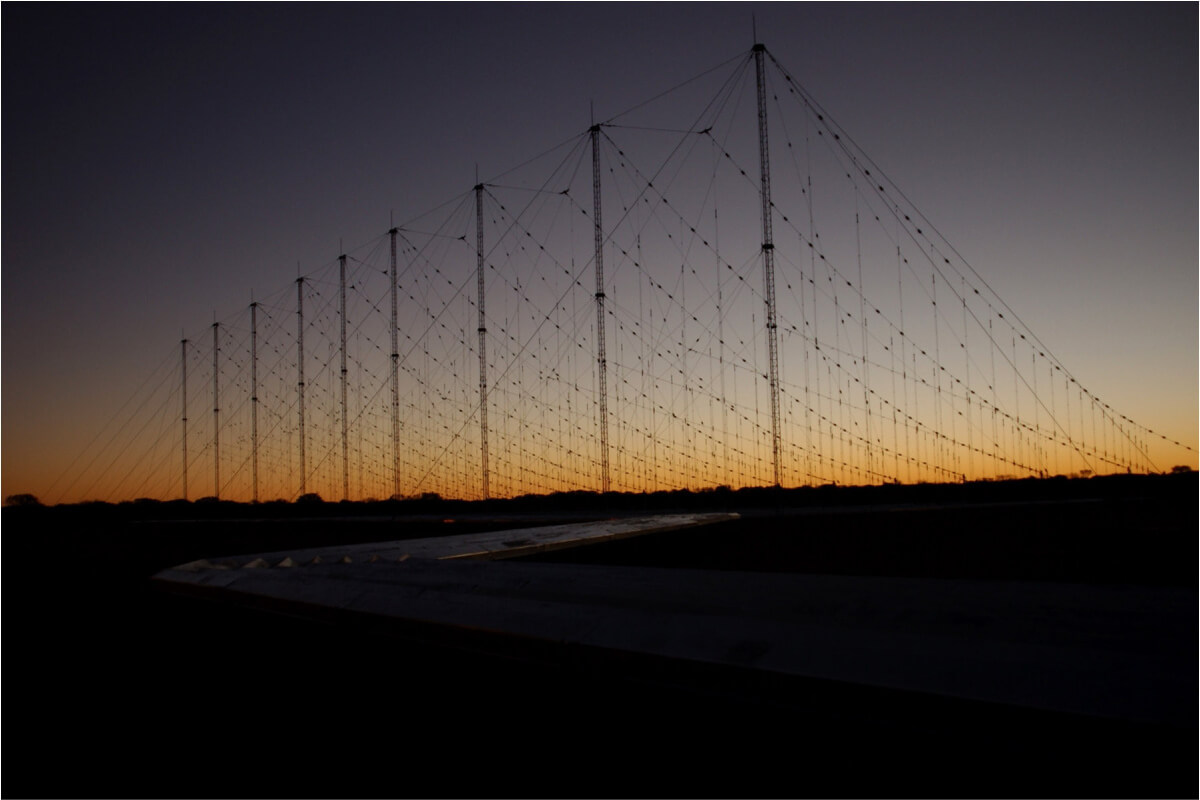
Another is an array which uses radio frequency scanning to map objects in space and what they are doing. “They are Australian designed and built and very impressive.”
These technologies can identify space debris, or signal if a military satellite has moved into an area Australia might be concerned about. “If we see a satellite that might have capabilities that would sense or threaten Australia or contribute to military coercion, we want to understand what that it’s be doing.”
This might warn of follow-on action or that the spacecraft might be damaged. “It might indicate that the mission focus is moved to a different part of the environment we might be interested in.”
AM Braz says the ADF looks constantly for evolving technology including by observing what’s happening in other theatres and conflicts. Intelligence clearly pays a key role in understanding what might be developed in global military systems, he says, along with what’s emerging from allies and partners in a more trusted environment.
Partners in Australian industry and academia provide technology and insights into what else might come. “We need to be open to new ideas.”
Drones are an example of rapidly evolving technology providing opportunity and risk. “We absolutely need to be able to adapt to emerging technologies.” He says the key element of Ukraine’s successful defence is its ability to quickly adapt and use technology to gain an asymmetric advantage negating its adversary’s capabilities.
“They are putting up a fierce fight with that ingenuity, adaptability and need to constantly probe and find weaknesses that they can exploit. That will define success for any military operation over time.”
What’s happening in space is vital across almost all elements of life on the planet, says AM Braz. “But many Australians, and I think some in the ADF, are blissfully unaware of what happens in the background to make their access possible. We use space across the economy for many things. Precision timing, navigation, agriculture, earth sensing, weather prediction and communication and to synchronise economic and banking systems and more.”
That makes space domain awareness is crucial.
“We monitor those systems with our industry partners to ensure continued access. “We ensure they’re operating safely and nothing’s happening that might risk our access to elements we count on.”
Systems such as GPS for navigation and precision targeting are vital to the ADF in what is likely to be a heavily contested environment, so what happens if they are knocked out?
“They are important contributors, but we are not solely dependent on them,” says AM Braz. “We have architected systems so that we have multiple pathways and options to ensure that we can navigate, time ourselves carefully and continue to operate even if they’re denied or disturbed.”
“Step one is to make each pathway for communications and command and control robust and resistant. Step two is to have multiple pathways and options so you can naturally and gracefully degrade across various systems and seamlessly make communications flow regardless of the challenge.”
AM Braz compares that to a mobile phone in a network of towers. It might ping a tower and track a signal from it. When it starts to lose that signal it seamlessly switches to another tower. “You’ve got this complex network of systems that can intelligently operate almost autonomously to ensure pathways stay open so that you can maintain communication.”
“Graceful degradation” ensures that if part of the system is lost, the system can switch to another node. It might not be as ideal, but it’s absolutely viable. If I lose you, I can go there.”
For an adversary to shut down that system, it must overcome multiple nodes and simultaneously. It’s a very difficult targeting problem.”
AM Braz says industry and academia are vital to ADF staying on top of threats and opportunities. “We engage with them constantly so that I have multiple pathways.”
In July the Joint Capabilities Group ran a forum for industry and academia to talk through its work in space and cyber and theatre logistics. “That’s so we have a shared understanding of what we see as challenges and what they see as opportunities to address those challenges so that we’re working together and not cross-purposed on anything we’re seeking to deliver.”
The Defence Science and Technology Group is a key source of intellectual horsepower, says AM Braz. “They have very close ties to the tertiary and research sectors across Australia. We leverage that link and look for opportunities to bring in new technology and new applications of technology that can, when you put them in the hands of operators, turn into very capable advantage on the battlefield.”
Defence is increasingly working alongside government agencies, industry and other national partners to build strategic depth and strengthen Australia’s ability to support and sustain operations, as set out in the National Defence Strategy (NDS), says AM Braz.
The NDS identifies the need for national resilience and preparedness, he says, and the fact that Defence can’t do it alone. “We need to harness the nation’s industrial, commercial and societal strengths to prevail if we do find ourselves in a dire situation. We need to deter that by being ready and credible and letting the world know that we are poised to respond and, if someone considers picking a fight with Australia, they decide today is not the day.”
Australia had long enjoyed isolation and remoteness as a buffer. “To some extent, that’s still true, but not entirely, as we see more advanced weapons and systems able to effectively shrink the battlespace and great power competition unfolding in our region.”
AM Braz says there will always be new technologies across multiple sectors. Now much technological adaptation and growth is driven by AI. It’s advancing multiple sectors simultaneously, materials technology, medical technology, sensing technology and design – and military technology. It’s clearly driving the cyber threat domain, but it’s also driving and shaping cyber defence and we’re harnessing that very actively to ensure we’re well postured to meet emerging threats.
“We’re constantly looking at new technologies and ways they’ll be applied.”
A key area is energy systems and technologies that will advance Australia’s ability to power and operate drones.
“Of keen interest to me as a military operator is quantum computing and quantum sensing, an extremely advanced field that’s developing rapidly and has implications across the military and civil sectors. That will revolutionise the amount of computing power we can use on tasks more conventional systems do today.”
Quantum computing and sensing capabilities will be a significant shift for militaries to understand, harness and accommodate, says AM Braz.
He says people will enable Australia to keep up with rapid change. “We have systems that have potential to deliver effects that matter. When we add people to that equation, we turn potential into capability. The human layer brings life to these capabilities. If I gave 10 different military members certain capability, system or tool to use, we’d probably end up with 15 different ways to use it.”
A version of this article was first published by The Australian.