
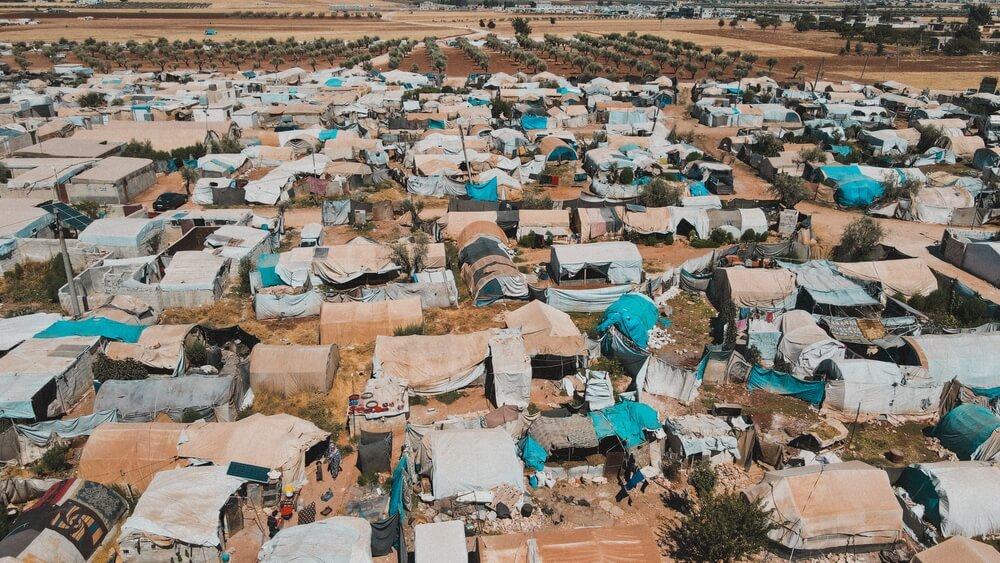
How is it that Australians – and our political leaders across the spectrum – seem so afraid of 34 women and children who have been living in a camp in Syria for 6 years? And why do we lazily talk about them as “ISIS brides” when the majority are children?
Australia needs to take responsibility for our citizens and bring the remaining groups still in Syria home. We are far better resourced and equipped to deal with the challenges involved than the Syrian government is, whether that is around prosecuting people for enabling or being members of ISIS, or supporting and reintegrating children into our society.
The public debate on how to manage Australian citizens with links to terrorist groups like Islamic State needs to be run less by fear and a relentless race to the bottom and more by some unavoidable legal facts and even some compassion for the children involved.
In international law, things are simple: the Australian government has an obligation to take Australian citizens back – this is the “right to return” in the UN’s Universal Declaration on Human Rights. Of course, any people, including the wives of ISIS fighters, who have committed crimes can and should then be prosecuted for those crimes.
It’s beyond ironic to hear the same political figures that are calling on Australians to “turn the temperature down” on other controversial issues do the opposite here.
Prime minister Albanese, for example, has played to community fears of the women involved by telling us he “has nothing but contempt” for them (which publicly stated view may also complicate a fair trial at some future point).
Other soundbites from political figures from prime minister Anthony Albanese down like “My mother said if you make your bed you lie in it” glide very lightly over the fact that the children he’s talking about made no choices about going to live in ISIS-controlled areas.
In 2019, the then Morrison Government repatriated 8 orphans and 2 Australian ISIS fighters. They included 5 children and grandchildren of a convicted ISIS terrorist.
As Scott Morrison said “repatriating these children is not a decision the Australian government made lightly”. “The opportunity now is for these children who are coming back to Australia. They can’t be held responsible for the crimes of their parents.”
Now, Anthony Albanese says “Well, we are doing nothing to repatriate or to assist these people. I think it’s unfortunate that children are caught up in this”.
It’s not “unfortunate”. The fact that these children haven’t been able to come home and are stuck in the camp is a result of an active decision by Mr Albanese. He’s in step with One Nation and the Coalition here, if that makes things any better.
Have Australians and our political leaders become more hard hearted and more afraid than we were back in 2019? It seems Anthony Albanese – and the rest of us — are less compassionate now than Scott Morrison was then.
We are punishing these children for the choices of their parents.
It is odd that we can be outraged and distressed at the abuse of children revealed in the Epstein files, but comfortable with the suffering of Australian children left in horrifically dangerous situations in remote Syria.
We can and should be appalled by Australians supporting or enabling terrorism, and some of the women involved may well have done so. Some may have acted as propagandists or enablers of ISIS as a terror organisation or mistreated people ISIS captured. If they have done these things, then they should be prosecuted and held accountable – as Germany has done with returned ISIS fighters and wives – some of the younger wives serving time in juvenile jails.
Having nothing but contempt for these Australian ISIS wives and widows should have very little to do with what our government does. Not liking particular Australian citizens or what they might have done overseas is not a legal ground for avoiding our responsibilities.
The Government has hidden from these issues for years by avoiding contact with Australians still left in the big camps housing thousands of people from formerly-ISIS controlled parts of Syria and Iraq. Nations like Belgium, Kosovo, Sweden and France have sent officials into the camps to identify and repatriate their own citizens, although others – like the UK – have used legal tools like cancellation of citizenship to avoid the issue as we seem to be trying to do.
Wealthy, capable countries like Australia and the UK shouldn’t palm off problems with our citizens on countries far less capable of managing them than we are. But that’s what we seem to be trying to do. And, when that fails and families return, it looks like the plan is to act surprised and blame someone else.
During his first presidential term, even Donald Trump repatriated tens of US citizens, including women and children, who had links to ISIS. Both the Trump and Biden governments urged other countries to take their citizens home, prosecute any adults who had committed crimes as part of being a member or enabler of ISIS, and provide care and support for the children.
Correction to original based on reader feedback: Trump 2.0 is taking a different line on many things, including immigration, but on this issue of ISIS families and fighters still sees the bigger picture about global security. With US assistance, Iraq has begun taking in detainees transferred from prisons in Syria as the Kurds retreat, and has called on other countries to help take them in. As US Secretary of State Marco Rubio said recently,
“This is a critical part of a long-term framework to prevent an ISIS resurgence, in line with proper burden sharing among Coalition members”.
Having people with terrorist links back in our communities is a problem we will have to confront and manage, but it is not a unique public safety issue. We manage the fact that convicted criminals go free once they have served their sentences (even Australians convicted of very nasty crimes including murder, rape and other horrific offences get released at the end of their sentences and live in the community).
Australia also routinely takes back Australian citizens jailed for crimes they committed overseas who then serve out their sentences here and are released into our community at the end. We happily deport foreign citizens who commit offences in Australia – because their home country has the responsibility to take them back.
The new Syrian Government doesn’t have the capacity to run big camps holding ISIS families and others. It’s going to plead with countries like Australia to take responsibility for our own citizens who are still there. Already, it’s watching as thousands of former ISIS fighters are moved out of Syria into Iraqi custody.
If our Government is tying itself in knots over these 34 women and children, imagine the gyrations and contortions when we are faced with actual Australian ISIS fighters coming home after prison time in Syria or Iraq.
ISIS and other terrorist organisations haven’t been eradicated in Syria or Iraq. So, leaving thousands of mainly women and children in camps in remote Syria leaves a recruiting pool of suffering people for ISIS and other extremist groups to exploit. Forced recruitment of child soldiers is something terrorist groups do. That means that not acting is only going to make a bigger security problem for the world.
Doing the right thing would show a moral centre to our government on a difficult public policy issue. Leading a public conversation on why this is the right thing for Australia to do and how the challenges will be managed is a role fit for a prime minister. In a time of anger and distrust, that’s a role many Australians would be delighted to see filled.